Lowriders Comeback: Boulevard
- 4.1
- Rating
- 50.00K
- Installs
- $1.99
- Price

 Analysis by App-foxy
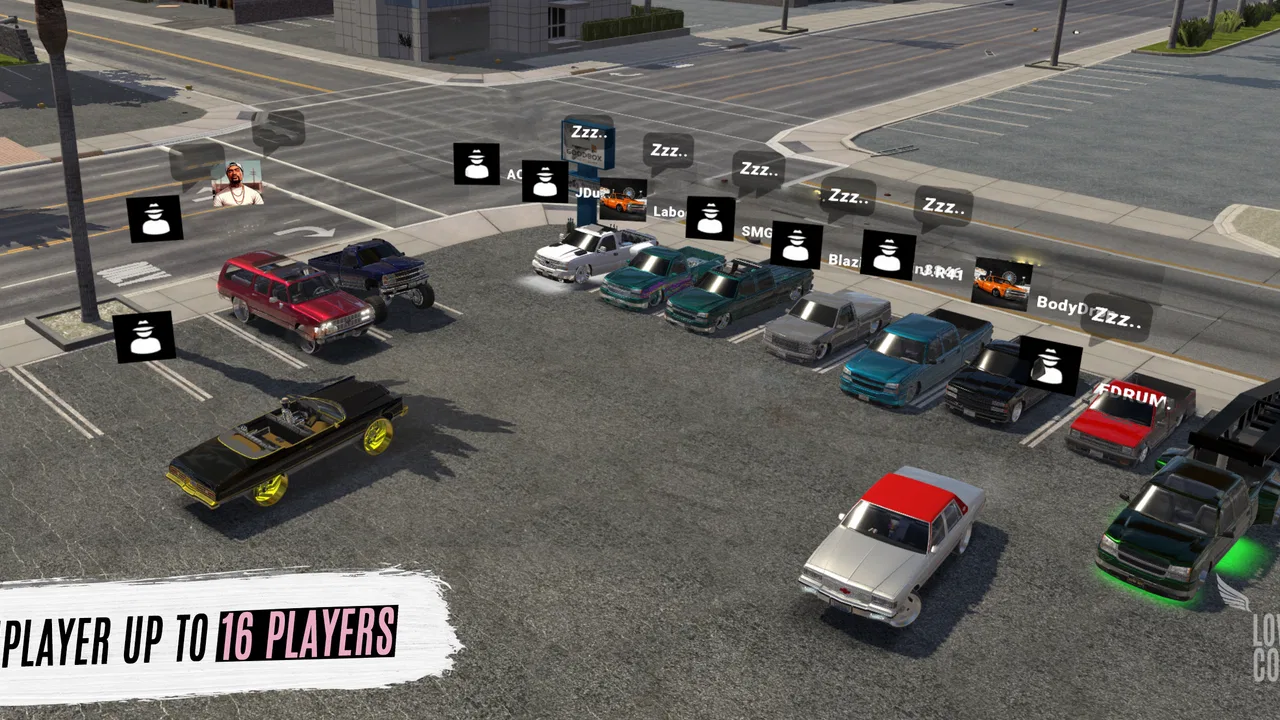
I went into Lowriders Comeback: Boulevard expecting a music game with a car theme, but it feels more like a stylish lowrider playground where the soundtrack sets the mood for customization, cruising, and meeting other players. The central appeal is easy to understand: build a ride that feels personal, take it into a colorful city, and find a reason to keep polishing the next detail. It is a paid game in the Music category from Beast Bros. Games, and its Teen rating fits the street-focused presentation and online social setting.
What makes it interesting is not a complicated premise. The pleasure comes from the short cycle of making a change, seeing how the car looks, taking it out for a drive, and deciding what deserves attention next. That rhythm is more relaxed than a traditional racing game, yet more active than a simple garage simulator. I found myself judging it less by speed and more by how well it turns small visual decisions into a reason to return.
How the boulevard loop feels in actual play
I find the boulevard loop most rewarding when I treat each visit as a small design test, rather than expecting a race-style objective to direct me. A quick cruise can show whether a change reads clearly in motion and give me a fresh idea to bring back to the garage. That approach also makes it easier to spot when a frustrating session may be about setup or connection rather than the game’s core appeal.
You May Also Like

 AccuWeather: Weather Radar
AccuWeather Review: A Quick, Clear Forecast for Everyday Decisions
For everyday plans, the best forecast is the one you can understand quickly. AccuWeather makes rain timing, radar, and local conditions easy to act on, with a few trade-offs.

 Hill Climb Racing
Why Hill Climb Racing Still Turns Crashes Into One More Run
A tiny car, a bumpy hill and one more upgrade: Hill Climb Racing keeps resurfacing because its simple chaos makes every near-miss feel personal.

 AliExpress - Shopping App
AliExpress Makes Global Shopping Feel Personal, but Shoppers Bear the Risk
AliExpress turns a global marketplace into a pocket-sized discovery engine. Its reach is useful, its shopping loop compelling, and its trade-offs easy to miss.

 Lords Mobile: Kingdom Wars
Lords Mobile Is a Kingdom-Building Routine, Not a Quick Match
A case-by-case verdict on the building, battles, device demands, and social commitments that make Lords Mobile rewarding for some players and exhausting for others.

 PDF Scanner app - TapScanner
TapScanner Makes Paperwork Easier to Capture, Check, and Share
TapScanner makes scanning with a phone feel less like a rescue operation and more like a dependable step in getting work done. Its capture tools are useful, though not flawless.

 Block Blast!
 Shows How Much a Puzzle Game Can Leave Out
A quiet grid game shows why puzzle players increasingly value instant clarity, repeatable skill and low-pressure play—and where the genre still needs to catch up.
More From Our News Desk
View All News


The first action is choosing what kind of player you want to be
The opening decision is not really about winning a race. It is about deciding whether you want to work on the car or get out into the city. That distinction matters because the game’s strongest moments come from switching between those two moods. In the garage, I could think about the vehicle as a project. On the boulevard, it became something to show, compare, and use as a reason to stay engaged.
Customization is the obvious starting point, but the useful way to approach it is to avoid changing everything at once. I had a better experience when I treated each adjustment as a test: make one visual change, leave the garage, and check whether the car still feels coherent in the city. A design that looks impressive in a close-up menu can feel too busy once it is moving through the wider environment. That small workflow—change, cruise, reassess—is more satisfying than endlessly tapping through options without seeing the result in context.
The lowrider theme gives the game a clear identity. It is not trying to be another generic street racer where every vehicle is judged by acceleration and cornering. The car is also a statement. That makes patience useful. If you enjoy arranging a look, comparing details, and gradually developing a recognizable style, the first action is naturally appealing. If you want immediate competition and a clear finish line, the initial pace may feel unusually gentle.
Feedback comes from seeing a choice survive outside the garage
The best feedback is visual and immediate. A modification has value because I can take it onto the boulevard and see whether it works as part of the whole car. That is a more meaningful response than a number going up in a menu. The city acts as a moving display case, giving each decision a little more context.
This is where the music category matters. The soundtrack and the cruising atmosphere encourage a different kind of attention from a conventional driving game. I was not constantly scanning for the next sharp turn or trying to shave time from a lap. Instead, the audio helped make the drive feel like a presentation of the car. The result is closer to a social music experience with vehicles than to a pure arcade racer.
There is also a useful emotional feedback loop in online cruising. Seeing other players’ rides gives customization a practical purpose. It is easier to decide what kind of build you want after noticing how different approaches look together in the same city. A restrained car can stand out beside something highly decorated, while a bold design may work better when the surrounding traffic and players create visual contrast.
My advice is to use the boulevard as a test environment rather than treating it as a place you visit only after finishing a build. Go out early, notice what catches your eye, then return to the garage with a specific goal. That prevents customization from becoming a long, unfocused search through possibilities.
The reward is ownership of a style, not just progress
The most convincing reward is the feeling that the car is becoming yours. A lowrider game needs that personal connection, because the satisfaction does not come only from unlocking a faster machine. It comes from recognizing the vehicle at a glance and feeling that its appearance reflects the choices you made.
Trading adds another layer to that feeling. A car or item can have value beyond its usefulness to your own collection because another player may want the look, the parts, or the complete presentation. That makes decision-making less obvious. Keeping everything is not always the most interesting option, and trading away something attractive can be worthwhile if it helps shape a more focused build.
I would approach trading carefully rather than treating it as a quick way to chase every appealing object. The strongest use of the system is to establish a theme first. Decide whether you are building a clean cruiser, a loud showpiece, or something more unusual, then trade with that direction in mind. Otherwise, it is easy to collect disconnected pieces that look exciting individually but do not create a memorable car together.
The game costs $1.99, which changes how I judge its reward structure. A paid entry point makes the experience feel more approachable than a completely free game that constantly asks for attention or spending. At the same time, in-app purchases range from $0.99 to $89.99 per item, so I would recommend checking the purchase flow carefully before committing to optional extras. The low purchase price does not automatically mean every later choice will feel inexpensive.
Online cruising works best when it is treated as a social showroom
The online side gives the boulevard a reason to remain interesting after the first customization session. Cruising with friends is not just a technical feature; it changes how the city feels. A personal project becomes something you can present, compare, and discuss while moving through the same space.
For an everyday scenario, I can imagine opening the game after work, making one small change to a car, and inviting a friend to cruise while deciding whether the new look is better than the old one. That is a more realistic use case than expecting a long uninterrupted play session. The game suits short visits where the goal is to make progress on a design, show it to someone, and leave with an idea for the next visit.
It is also useful for players who enjoy collecting visual references. A friend’s car can suggest a color balance, a cleaner arrangement, or a different way to make the same theme feel distinctive. The social value comes from inspiration as much as competition. If you prefer playing entirely alone, the online focus may reduce the game’s appeal, because part of the boulevard’s energy comes from other people being present.
Teen-rated content and online interaction also make this a game I would introduce to younger players with ordinary supervision around social play and purchases. I would not choose it as a quiet offline game for a child who should avoid online interaction. For older teens and adults who like car styling, music, and casual social spaces, the rating feels appropriate.
The reset is what makes another session tempting
A good session does not need to end with a dramatic victory. In this game, the reset happens when I finish a cruise, notice one thing that could look better, and return with a new plan. That is the reason another session begins. The game turns completion into a temporary state rather than a final destination.
This reset can work in two directions. Sometimes I leave the boulevard satisfied because the car finally looks consistent. Other times, seeing it in motion exposes a weakness: a detail that disappears at a distance, a combination that feels too crowded, or a design that resembles the surrounding cars too closely. Both outcomes are useful because they create a clear next step.
Trading can reinforce that reset. A session may begin with a plan to improve one car and end with a decision to exchange something, rethink the theme, and start again. That uncertainty is part of the appeal, but it can also become tiring if you prefer predictable progression. Players who need a checklist of missions and a strong sense of completion may find the open-ended loop less motivating than a conventional racing campaign.
I also found that the game is better when I set a small personal objective before starting. “Improve the front-end look,” “make the car more consistent,” or “find a design worth showing a friend” gives a short session shape. Without that intention, cruising can feel pleasant but directionless. The game supplies the atmosphere; the player often has to supply the immediate goal.
Where it fits beside other music and driving games
Compared with a standard racing game, this is less concerned with lap times, technical mastery, and the pressure of constant competition. The reward is not primarily crossing a finish line first. Compared with a conventional car customization app, it adds a living city, music, online cruising, and the possibility of trading. That combination gives it a more active identity than a static design tool.
It also differs from rhythm games that turn every song into a sequence of precise taps. Here, the musical identity supports the mood of the boulevard rather than making timing accuracy the entire challenge. If you want a game that tests reflexes through notes and beats, another music title will probably be a better match. If you want music to make a vehicle-focused social space feel more distinctive, this approach is more appealing.
The trade-off is depth. A focused racing game may offer more demanding driving, while a dedicated customization game may provide more detailed control over appearance. This title earns its place by combining several lighter activities into one loop. That makes it accessible, but it also means no single part should be judged as though it were a specialist simulator.
The game has an average rating of 4.1 from around one thousand ratings, with roughly 260 written reviews, and it has passed 50 thousand installs. Those figures suggest a real early audience, but I would still view the game as something to evaluate for its particular style rather than as a universal recommendation. Its appeal depends heavily on whether the player enjoys self-directed customization and social cruising.
Practical details before downloading
Beast Bros. Games lists the current release as version 0.2.17, and the game requires iOS or Android 12 or later. That operating-system requirement is worth checking before purchase, especially if you are using an older phone or tablet. A device that cannot meet the requirement will be a more important barrier than any preference about the gameplay loop.
The price is another point to think through. Paying $1.99 upfront is reasonable for someone who wants to try a focused lowrider experience without beginning at a free download, but the optional purchase range means I would keep spending under personal control. If you are buying for a teenager, discuss that before handing over the device. The game’s design encourages returning to improve a collection, and that can make optional purchases feel tempting even when they are not necessary for enjoying the core idea.
I would also recommend starting with a modest customization goal instead of trying to build a perfect car immediately. Learn how your choices look during a cruise, then decide whether the game’s presentation and social rhythm suit you. That approach gives the purchase a fair test without assuming that every available option must be explored at once.
Who will enjoy the loop, and who should skip it
This game is a strong fit for someone who likes lowrider culture, visual customization, music-led atmosphere, and casual online time with friends. It is especially suitable for players who enjoy making a car look distinctive and then using the city as a stage. The trading element adds a reason to think about what belongs in a collection and what might be more useful to someone else.
I would be more cautious recommending it to a player who wants a serious racing challenge, a tightly scripted campaign, or a completely offline experience. It may also disappoint anyone who dislikes open-ended goals. The game’s loop depends on personal projects, social comparison, and the desire to improve a design after seeing it in motion. Without that interest, the boulevard may feel like a pleasant backdrop without enough pressure to keep playing.
It is also not the best choice if you want every reward to be earned through a clearly measured skill test. The satisfaction here is subjective: a better-looking car, a smarter trade, or a more enjoyable cruise. That is rewarding for creative players, but less convincing for people who need rankings, races, and unmistakable wins.
My verdict on the action-feedback-reward-reset cycle
The loop works because each stage feeds the next. I make a change, take the car into the city, receive visual and social feedback, decide whether the result deserves to stay, and return with a new idea. The reward is not simply another item; it is a stronger sense of direction for the next build. The reset happens naturally when the finished car reveals one more possibility.
The best reason to play is the feeling of turning a car into a personal signature. That feeling is supported by the music, the colorful boulevard, online cruising, and trading, but it is not forced. You need to bring some curiosity and self-direction to the experience.
My recommendation is positive with clear limits. At $1.99, Lowriders Comeback: Boulevard is worth considering if you want a relaxed, social music game centered on lowrider customization rather than a conventional racer. I would skip it if your priority is high-speed competition or a fully structured progression path. For the right player, though, the next session begins for a simple reason: there is always one more change to make, one more cruise to test it, and one more chance to decide that the car finally feels like your own.
FAQs for Lowriders Comeback: Boulevard
01What is Lowriders Comeback: Boulevard about?
Lowriders Comeback: Boulevard is a car customization and driving game focused on lowrider culture. Players can build and personalize vehicles, adjust suspension and stance, improve visual details, and cruise through a boulevard-style environment. The experience is aimed at users who enjoy slow-paced driving, stylish car presentation, and customization more than traditional racing competition or highly realistic simulation.
02Can I customize the cars in Lowriders Comeback: Boulevard?
Yes, customization is one of the main attractions of Lowriders Comeback: Boulevard. Depending on the available progression and vehicle options, players can modify the car’s appearance, stance, wheels, paint, and other visual elements. The lowrider-style suspension and presentation are especially important, so the game is better suited to players who enjoy creating a unique-looking vehicle rather than simply choosing the fastest car.
03Does Lowriders Comeback: Boulevard require an internet connection?
The connection requirements may vary according to the version of the game and the feature being used. Basic driving or customization activities may be available without a constant connection, while advertisements, updates, cloud features, or other online content can require internet access. Before downloading, check the current store description and test the game with Wi-Fi disabled if offline play is important to you.
04Is Lowriders Comeback: Boulevard free to download?
Lowriders Comeback: Boulevard may be offered as a free download, but availability of advertisements, optional purchases, or unlockable content can depend on the platform and current release. Free installation does not always mean that every vehicle, customization part, or gameplay feature is immediately accessible. Review the app-store listing for the latest pricing, in-app purchase details, and supported devices before installing.
05What devices can run Lowriders Comeback: Boulevard smoothly?
Performance depends on the phone or tablet’s processor, graphics hardware, memory, operating-system version, and available storage. Newer mid-range and flagship devices should generally provide a smoother experience, while older or entry-level hardware may show longer loading times, reduced visual quality, or occasional frame-rate drops. Keep the game updated and close background apps if you notice performance problems during driving.
Pros
- Detailed lowrider customization with plenty of visual upgrade options.
- Cruising-focused gameplay offers a relaxed alternative to competitive racing.
- Authentic boulevard atmosphere with music
- cars
- and street-style presentation.
- Simple controls make steering and cruising easy for new players.
- Progression gives you reasons to keep upgrading and collecting vehicles.
Cons
- Some upgrades and vehicles may require considerable grinding to unlock.
- Driving physics can feel awkward during tight turns and slow maneuvers.
- Performance may vary on older phones
- especially in busy areas.
- The gameplay loop can become repetitive after extended cruising sessions.
- Ads or optional purchases may interrupt progress for some players.

Lowriders Comeback: Boulevard
Gallery